 OnChain
How to Check If a Crypto Token Is a Scam Before You Buy
Rug pulls — where developers drain a token's liquidity or dump a hidden supply — accounted for billions of dollars in trader losses last year alone. The brutal part: most rug pulls are detectable before you buy, with checks that take about a minute. Here's the process.
The 60-second token safety check
Step 1: Get the exact contract address
Scammers clone popular tokens with identical names and tickers. Always copy the contract address from the project's official site or a listing aggregator — never from a reply, DM or Telegram forward. In OnChain, you can paste any contract address directly into search to pull up the real token.
Step 2: Run a contract risk score
Token contracts are code, and code can hide traps: mint functions that let devs print unlimited supply, transfer taxes that can be raised to 100%, blacklists, and "honeypots" that let you buy but never sell. OnChain scores any token contract for risk automatically, flagging dangerous permissions and suspicious patterns — so you don't need to read Solidity to spot them.
Step 3: Check holder concentration
If the top handful of wallets control a large share of supply (outside of locked or burn addresses), they can dump on you at will. Concentrated holdings plus fresh wallets created around launch is a classic pre-rug pattern. OnChain's wallet x-ray lets you inspect exactly what the big holders are doing — accumulating, or quietly heading for the exit.
Step 4: Verify liquidity is locked
The classic rug pull: developers pair the token with ETH or a stablecoin in a liquidity pool, wait for buyers, then withdraw the pool. If liquidity isn't locked or burned, nothing prevents this. Security researchers consistently find that two checks — locked liquidity and holder concentration — catch the majority of scams on their own.
Step 5: Watch what smart wallets do
Scam tokens are marketed hard to retail but avoided by wallets with a track record. Before aping in, check whether any smart-money wallets hold the token — and whether whale flow is accumulation or distribution. Silence from smart money is itself a signal.
Red flags that should end the conversation
- Anonymous team + unaudited contract + "guaranteed" returns
- You can buy but test sells fail (honeypot)
- Transfer tax that the owner can change after launch
- Most of the supply in a few wallets created last week
- Liquidity unlocked, or "locked" for days rather than months
- Contract owner can mint new tokens or pause trading
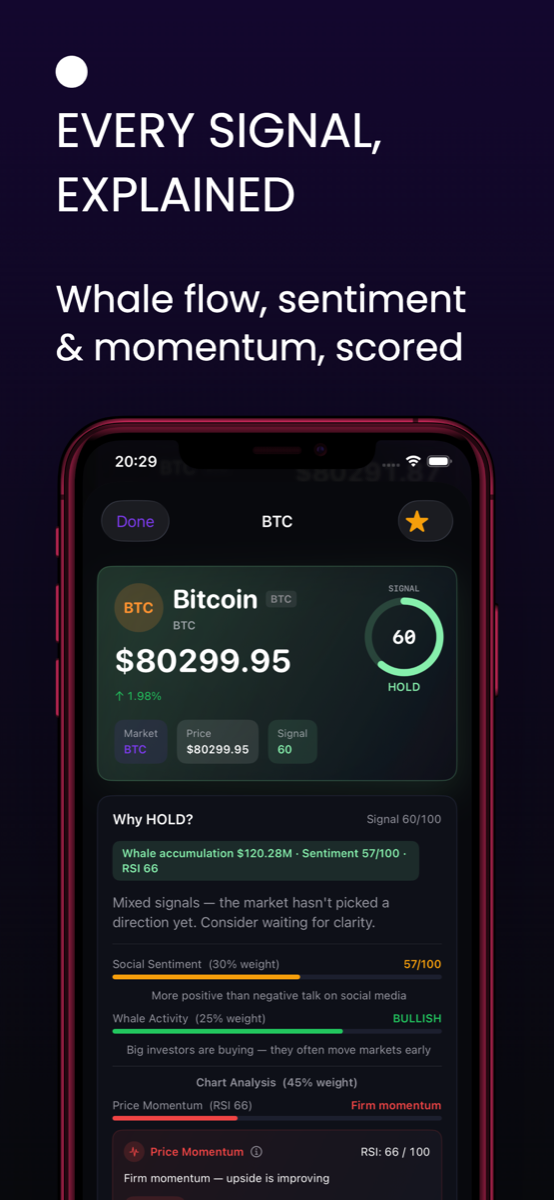
Scan any token in seconds
Paste a contract address into OnChain and get an instant risk score — plus whale flow, holder behavior and sentiment on the same screen.
Download on theApp StoreFAQ
What is a honeypot token?
A token whose contract allows buying but blocks or taxes selling to near-100%, trapping your funds. Contract risk scanning catches most honeypots before you buy.
Are audited tokens always safe?
No — audits reduce contract risk but don't stop teams from dumping their own supply. Combine contract checks with holder and liquidity checks.
Can a token be safe but still lose money?
Absolutely. A clean contract means it isn't a scam, not that it's a good investment. Structural safety and price risk are different questions.
Crypto markets are volatile. This guide is information, not financial advice. Always do your own research.