 BuildAudit
Why GPS-Stamped Job Site Photos Matter
A photo on your phone's camera roll proves you took a picture. It doesn't prove where, or when, or that it hasn't been swapped for a different one since. On a job site, that distinction is the difference between evidence and a screenshot.
What "GPS-stamped" actually means
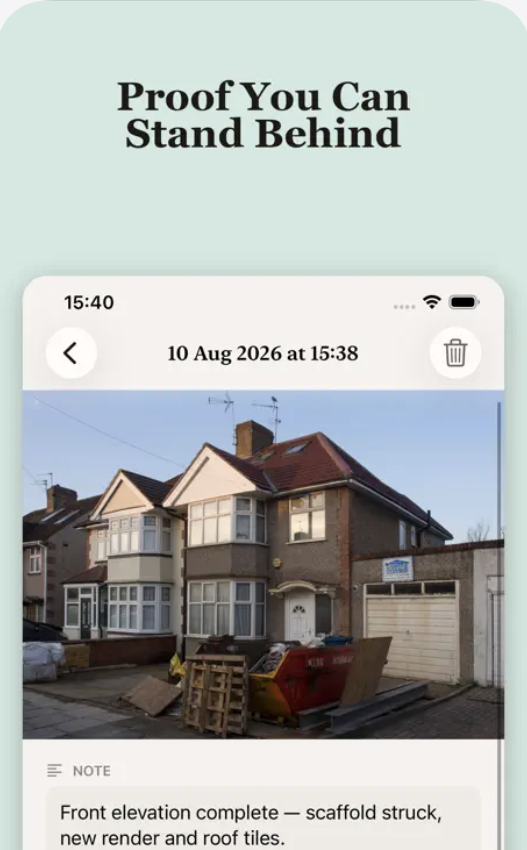
A properly stamped job site photo embeds, at the moment of capture: exact GPS coordinates, a reverse-geocoded street address, the date and time, and device metadata. That data travels with the photo itself, not as a caption you typed later — which is what makes it usable as evidence rather than just documentation.
Where this actually matters
Insurance claims
When damage is disputed — pre-existing vs caused during the job — a timestamped, geotagged photo taken before work started is the fastest way to close the argument. Insurers increasingly expect metadata-backed evidence, not just a photo attached to an email.
Client disputes
"That wasn't like that when you started" is a common dispute, and it's usually resolved in minutes with a dated before-photo. Without a timestamp, it's your word against theirs.
Subcontractor and supplier accountability
Photos of delivered materials, completed sub-trades, or site conditions on handover protect you when responsibility for a defect gets debated weeks or months later.
Proof of completion
A dated, located photo of finished work is a cleaner completion record than a verbal sign-off — and it's the evidence a Work Summary or Insurance Evidence report is actually built on.
What to capture, and when
- Before starting — full context shots of the area, existing conditions, anything already damaged or unfinished.
- Mid-job at key milestones — structural stages that get covered up later (framing before drywall, wiring before it's boxed in).
- Materials on delivery — proof of what arrived, and its condition, before it's installed.
- On completion — the finished result, from the same angles as your "before" shots where possible.
Every photo, automatically stamped
BuildAudit stamps GPS, address, date and time on every photo — no manual entry required. Free to start on the App Store.
Download on theApp StoreTurning photos into a defensible record
Individual stamped photos are useful; organized into a dated project record with notes and a punch list, they become something a client, insurer, or your own future self can actually rely on. See how that comes together in a Daily Site Log report.
FAQ
Can GPS-stamped photos be faked or edited?
Any photo can technically be altered, but metadata embedded at capture time by the app itself — rather than typed in manually afterward — is meaningfully harder to fabricate convincingly and carries more weight than a caption.
Does GPS stamping work indoors or in areas with poor signal?
Modern GPS chips can acquire a location fix in most conditions without cellular signal, though accuracy can vary indoors or in dense urban areas. Reverse-geocoding the address typically happens once you're back online.
How long should I keep job site photos?
Long enough to cover your liability window — for most trades, that means keeping photo records for at least as long as your warranty period, and longer for anything insurance-related.
This guide is general information for contractors, not legal or insurance advice. Check your specific insurer's and jurisdiction's requirements for photo evidence.