 BuildAudit
What to Put in a Daily Site Log Report
A daily site log only earns its keep months later — when a dispute comes up, a delay needs explaining, or an insurer asks what actually happened on a specific date. A log that just says "worked on site" tells you nothing when you need it most. Here's what actually belongs in one.
The three report types, and when to use each
| Report | Best for |
|---|---|
| Work Summary Report | A complete progress overview to hand a client or property owner |
| Insurance Evidence Report | Detailed photo evidence with metadata, built specifically for claims |
| Daily Site Log Report | A day-by-day activity breakdown, including weather and open punch list items |
What belongs in a daily log
- Date and weather conditions — weather explains delays and is often the first thing referenced in a schedule dispute.
- Who was on site — your own crew, subcontractors, or inspectors present that day.
- What was actually done — specific tasks completed, not a general "continued work" note.
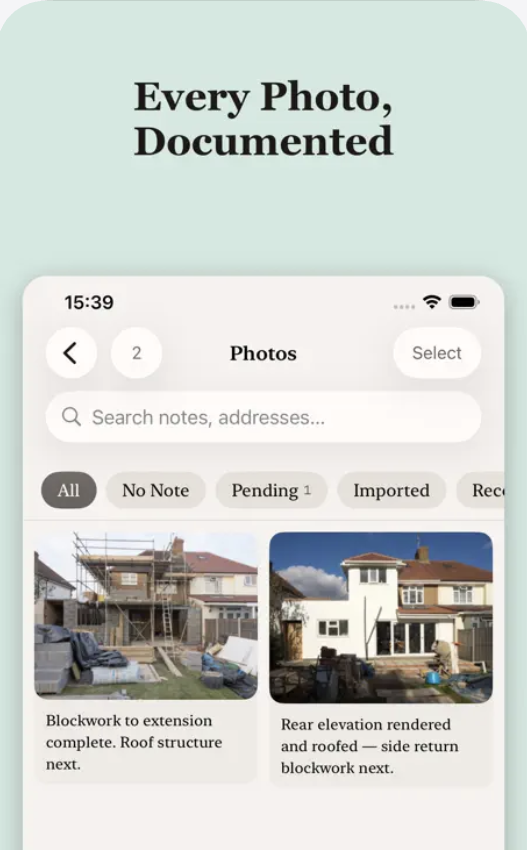
- Photos tied to the day's work — timestamped and located, showing progress as it stood at end of day.
- Materials delivered or used — useful for both progress tracking and later invoicing.
- Open punch list items — what's still outstanding, and its priority, as of that day.
- Anything unusual — a delay, a site issue, a client request — the kind of detail that's obvious today and completely forgotten in three months.
Why "continued work as scheduled" isn't a log
A vague daily entry protects nobody. If a delay dispute or insurance question comes up later, a log that says "framing progressed, delayed ~2 hours by rain from 10am, delivery of lumber confirmed" is worth something. "Worked on site" is not — it can't confirm or refute anything.
Daily logs, built from what you already captured
BuildAudit generates a Daily Site Log report — with weather, activity, and open punch list items — directly from your project's photos and notes.
Download on theApp StoreFAQ
Do I need a daily log for every job, even small ones?
For short jobs with no likely disputes, a lighter touch is fine. For anything multi-day, involving subcontractors, or with insurance exposure, a daily log is cheap insurance against a much more expensive argument later.
How is a Daily Site Log different from a Work Summary Report?
A Work Summary is a project-level overview aimed at a client — the big picture. A Daily Site Log is day-by-day operational detail, aimed as much at your own record as at anyone else.
Who typically asks to see a daily log?
Clients during a dispute, insurers assessing a claim, and — often overlooked — you, six months later, trying to remember exactly what happened on a specific date.
This guide is general documentation guidance for contractors, not legal or insurance advice.